


Why poor crypto regulation could intensify the Israel-Hamas conflict

Opinion
Opinion
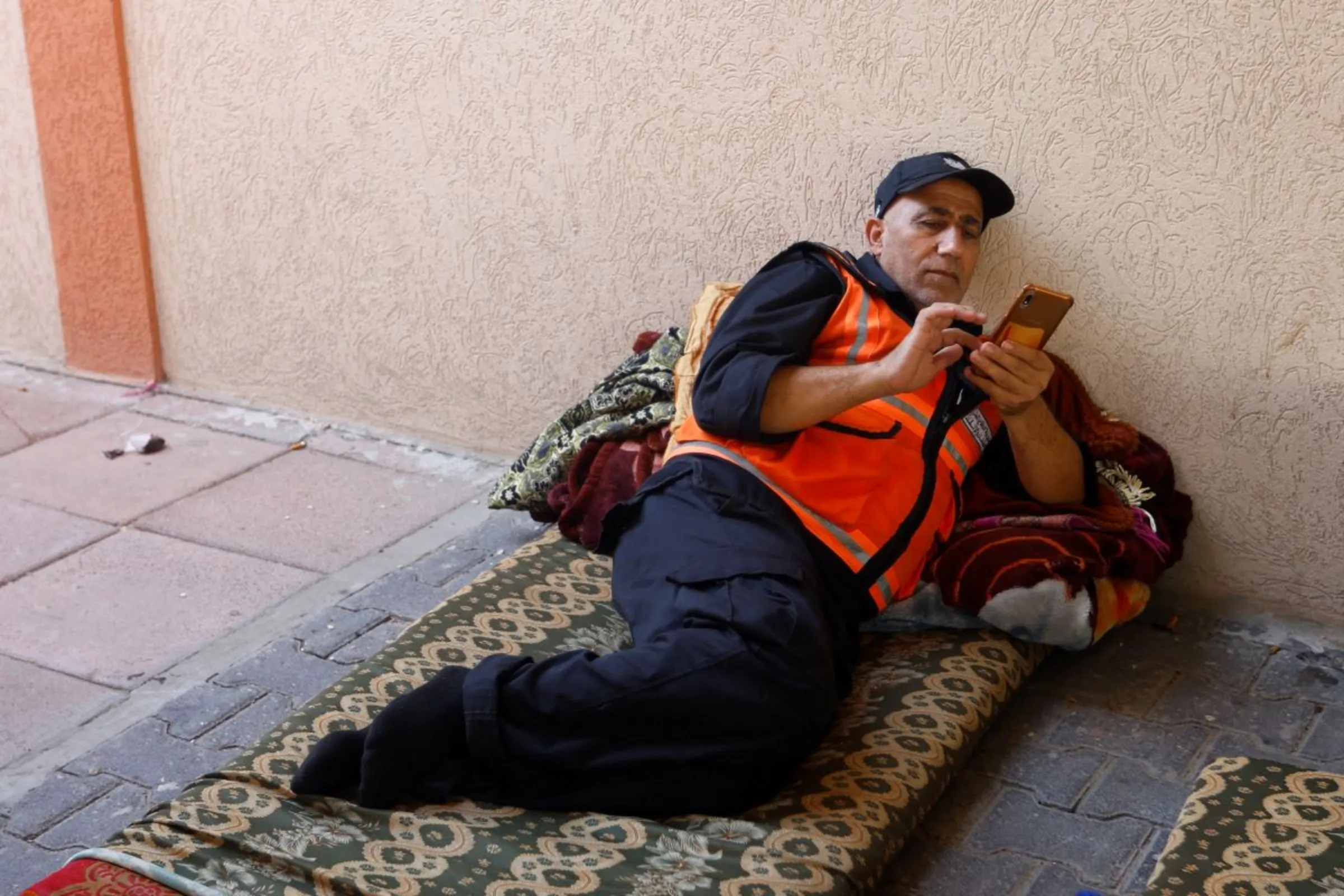
Palestinian emergency personnel checks his smart phone as he shelters in a school amid Israeli strikes in Khan Younis in the southern Gaza Strip October 12, 2023. REUTERS/Ibraheem Abu Mustafa
To poke crypto regulators into action, critics should look towards Washington and London, not Gaza
is a technology , researcher, and assistant professor in international development.
Crypto for non-state militant groups for some time. Bitcoin is popular but pseudonymous, making transactions easy to track. Other crypto tokens, like Monero and ZCash are just as environmentally awful, but offer high levels of privacy, making them more attractive for illicit use. North Korean hacker groups crypto to fund the country’s nuclear weapons program. And Crypto to fund covert operations in Central Africa despite sanctions.
Climate change, problem gambling, and predatory investment scams are all tricky to tackle with crypto in tow. Not to mention money laundering, ransomware attacks, and sanctions evasion. But intensified this week following concerns crypto was the for the Palestinian group Hamas.
The crypto-critic actor and author Ben Mackenzie was quick to point out Binance’s role. The world’s largest crypto exchange soon agreed with Israeli authorities to linked to the group. Seized funds would go to Israel’s coffers. The seizures weren’t Binance’s first connection to Hamas. The Commodity Futures Trading Commission (CFTC) earlier this year sued the company and founder Changpeng Zhao, for in small sums to avoid money laundering controls.
The former chief of the US SEC Office of Internet Enforcement formerly known as Twitter: “Wake The F. Up US DOJ. The link between crypto/terrorism/Hamas/Iran is not just a threat to Israel but a threat to the US and everywhere else as well.”
But coupling any industry that requires a regulatory crackdown to wider security concerns often leads to unintended consequences. Ten years ago, Kathryn Bigelow – director of war movies including Zero Dark Thirty and The Hurt Locker – made an animated short film about elephant poaching. that cracking down on the illegal ivory trade was not only great for elephants but would also “cut off funding for some of the world’s most notorious terrorist networks.” Bigelow’s made a plausible case for lumping ivory together with the militant Islamist group Al-Shabaab.
Money, weapons, and military training soon flowed into Africa’s elephant poaching hotspots. But “evidence for the relationship between poaching and armed non-state actors [was] very thin,” said , the author of a study published in Global Environmental Change. “In the al-Shabaab case I think it’s been largely discredited.”
In 2009, a suggested that buyers of bootleg DVDs might inadvertently fund everyone from Hezbollah to the IRA. The claims again seemed plausible, . The global drugs trade has been tenuously linked to international terrorism in South America.
But the resulting ‘’ myths fuelled a war on vulnerable rural communities, rather than drug use. In a hot-blooded reaction to the threat of terrorism, militarised forms of conservation in some cases prompted entire communities to be .
By suggesting possible links between the crypto industry and terror threats, we don’t highlight the urgent need for cracking down on crypto. But rather, we perpetuate a myth that a militarised response solves everything. Groups in Israel are still setting up appeals for displaced Israelis using bitcoin. Looking towards Israel to promote decisive action on crypto is a non-starter.
More cryptocurrencies are than anywhere else in the world. Most of the largest exchanges call the US home. London is growing as one of the most . offer a warm embrace to big crypto industry players. The largest crypto , founder , and have all been encouraged to the UK.
There is little doubt that urgent action on crypto is needed. But that action starts at home, not in Gaza.
Any views expressed in this opinion piece are those of the author and not of Context or the 海角黑料.
Tags
- Cryptocurrency
- War and conflict




Go Deeper




Latest on Context





- 1
- 2
- 3
- 4
- 5
- 6